Funny Happy: A Playful Font for Creative Branding
I was sitting at my desk, staring at a blank brand board, trying to find the right visual language for a new client—a cozy little café that wanted to feel like a warm hug every time someone walked in. I had a few fonts on my shortlist, but none of them quite captured the whimsical yet welcoming vibe they were going for. That’s when I stumbled upon Funny Happy. At first glance, it looked like a font designed for kids’ birthday invitations or school projects, but as I started testing it out, I realized it had more depth than I expected.
What Makes Funny Happy Stand Out?
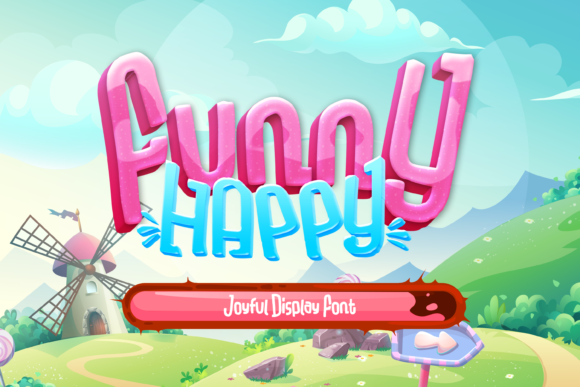
Funny Happy is a chunky, playful display font with rounded edges and exaggerated serifs that give it a friendly, approachable look. It has this kind of “handwritten” energy without being too messy—like someone drew each letter with a big marker and then gave it a gentle polish. The personality of the font is unmistakable: it feels authentic, cheerful, and just a bit mischievous. It’s not the kind of font you’d use for a corporate report, but it’s perfect for anything that needs a touch of charm and character.
As I began experimenting with Funny Happy, I noticed how well it balanced between being fun and still readable. It didn’t scream “childish” or “unprofessional”—instead, it felt like a natural fit for brands that want to be seen as creative, joyful, and human.
Testing Funny Happy in Real Design Projects
I decided to test Funny Happy on a logo draft for the café. The original concept used a clean sans-serif typeface, which worked well for the menu and website, but the logo felt too serious. When I swapped the primary text with Funny Happy, something clicked. The logo suddenly felt like it belonged in a neighborhood where everyone knew your name. It wasn’t just a sign—it was an invitation.
Next, I tried using Funny Happy on packaging mockups. The café sells custom-made mugs, and the labels needed to stand out without overwhelming the design. I paired Funny Happy with a simple sans-serif font for the product names and pricing, and it worked beautifully. The contrast made the information easy to read while keeping the overall look light and inviting.
I even used Funny Happy on social media graphics. One post featured a photo of the café’s signature latte, and I added a caption using Funny Happy to highlight the drink’s name. The response from followers was immediate—people loved how it matched the café’s tone and made the content feel more personal.
Where Funny Happy Works Best
Funny Happy isn’t meant to be the only font in your brand system, but it shines as a display font. It works especially well for headlines, logos, and any design element that needs to grab attention quickly. For example:
- Logo Design: Use Funny Happy as the main typeface if the brand wants to feel playful and approachable.
- Packaging Design: Add it to labels, tags, or box wraps for a cohesive and eye-catching look.
- Social Media Graphics: Pair it with a supporting font for captions or call-to-action text.
- Website Headers: Use it sparingly for hero sections or banners to create a focal point.
- Print Materials: Try it on business cards, flyers, or posters for a unique and memorable impression.
One thing I learned during the project was that Funny Happy can be tricky to pair with other fonts. I found that it worked best with clean, modern sans-serif fonts like Helvetica or Futura. These combinations kept the design balanced while allowing Funny Happy to take center stage.
Practical Tips for Using Funny Happy
If you’re considering using Funny Happy in your next project, here are a few tips to keep in mind:
- Test it before committing: Try Funny Happy on different backgrounds, colors, and sizes to see how it behaves in various contexts.
- Use it strategically: Don’t overdo it. Keep it for headlines, logos, or accents rather than long blocks of text.
- Check for licensing: Make sure you have the right to use Funny Happy commercially if your project involves print or digital distribution.
- Pair it wisely: Experiment with different font pairings to find what works best for your brand’s voice and style.
Overall, Funny Happy proved to be a versatile and valuable addition to the café’s brand identity. It helped convey their message with warmth and creativity, and I’m already thinking about how to use it in future projects. Whether you're designing for a children’s book, a local boutique, or a handmade shop, Funny Happy could be the perfect tool to bring your brand’s personality to life.